Paris, the capital of France, blends history, culture, and modern city life in a way few places can match. Iconic landmarks, walkable neighborhoods, and a dense calendar of museums, markets, and performances make it one of the best cities in the world to study French. Choosing among the best language schools in Paris starts with your goals: conversation for travel, professional French for work, exam preparation, or long-term language immersion.
Walking through Paris, you meet places that shaped France and still shape everyday speech. From the Eiffel Tower to Notre-Dame Cathedral, each landmark brings stories you can read, hear, and discuss in French. That context helps vocabulary stick far better than isolated textbook lists.
Museums such as the Louvre deepen the experience. Audio guides and wall texts in French give listening and reading practice while you look at world-famous works. Pair museum visits with classes at a quality language school and you reinforce language skills every afternoon outside the classroom. Language memory strengthens with spaced repetition and daily language contact.
Paris hosts some of the best language schools and institutes for language learners of every level. National networks such as Alliance Française promote French worldwide, while independent schools listed below focus on small groups, private tuition, or intensive programs in the city itself. The best school for you depends on schedule flexibility, class size, accreditation, and how much cultural activity you want around your lessons.
Many courses go beyond grammar drills. Guided walks, cooking sessions, and theater outings—often run in French—turn language study into real communication. That mix of classroom work and city practice is why so many students say Paris is among the best places to improve fluency quickly.
Immersion with native speakers remains one of the strongest ways to progress. Paris has frequent conversation meetups in cafés and public spaces, where learners trade practice time in a relaxed setting. Universities and cultural centers also host exchanges that help you meet locals and other internationals.
Combine those meetups with a structured course at a language school and you get both correction and confidence. The school builds accuracy; the city builds speed and natural rhythm.
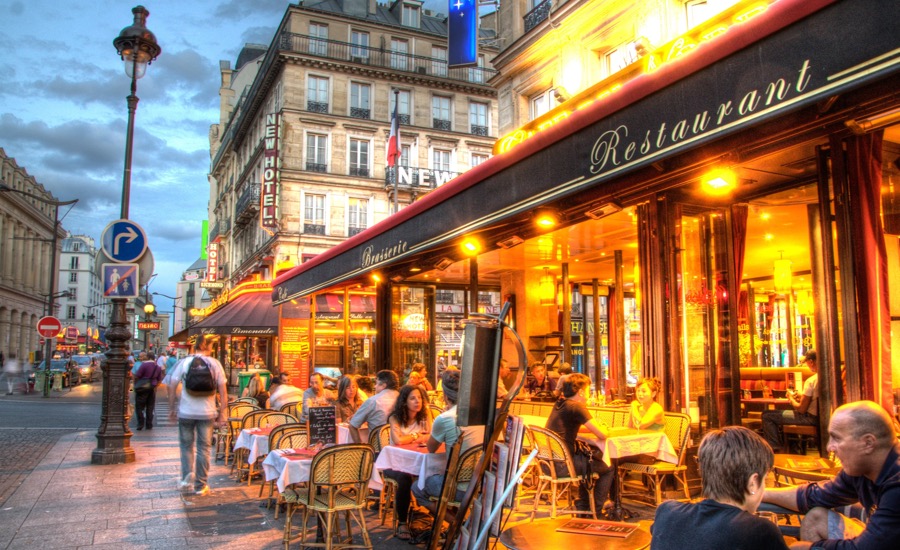
Daily life in Paris—markets, cafés, metro announcements, shop conversations—offers constant practice. Neighborhoods such as Montmartre and the Latin Quarter each have their own mood, which is useful when you want varied listening situations after class.
Paris has long attracted writers and artists, from Victor Hugo to Hemingway and Sartre. Bookshops such as Shakespeare and Company and libraries like the Bibliothèque Sainte-Geneviève support reading practice. Literary events in French are another low-pressure way to hear formal and informal registers side by side.
Food is central to Paris culture, and ordering, shopping, and cooking classes are practical ways to use everyday language and French. Many cooking classes run sessions partly or fully in French, including market visits that force real interaction with vendors.
When you compare the best language schools in Paris, check accreditation labels such as Qualité FLE or Groupement FLE membership, typical class size, start dates, and whether the school helps with housing. Speak French as early as you can—even imperfectly. Use campus resources, city events, and a dictionary or translator app between language lessons so progress does not stop when class ends.
Patience matters too. A strong programme accelerates language learning, but daily habits in Paris turn that progress into lasting fluency.
One of the smartest ways to prepare before arrival is to practise core skills with French Translator Dictionary + by Vidalingua. It combines dictionaries, verb conjugations, and real-time translation so you can review vocabulary from lessons and street life. Download it free on the App Store and Google Play.



Below you will find expanded profiles of established language schools in Paris. Each entry covers location, teaching style, course options, and who tends to thrive there—so you can shortlist the best school for your timeline and budget.
When you read each profile, ask how the language-only policy works in class (French-only vs bilingual explanations), how placement tests are run, and whether sample timetables are published. Those practical details often matter more than marketing slogans when you finally book.
Start with your target: conversational fluency, career French, university entry, or exam certificates. A school that is excellent for intensive conversation may be weaker for specialised legal French, and the reverse is also true. Write down weekly hours you can commit; many programmes in Paris offer 15–25 lesson weeks, while private tutors package hours differently.
Next, weigh neighbourhood logistics. A Marais or Les Halles school shortens commute times if you stay centrally, while the 10th, 11th, or 15th can feel more residential and sometimes cheaper for housing. Check campus pages for Qualité FLE, Qualiopi, eduQua, or Groupement FLE mentions—these labels do not guarantee the perfect class, but they show a school has been reviewed against shared standards.
Finally, budget for extras: registration fees, course books, exam sittings, and social activities. The best programme for one student is the one that fits schedule, method, and neighbourhood—not only the one with the flashiest homepage. Use trial lessons where offered, and keep a translator or dictionary app handy so classroom vocabulary transfers into daily Paris life.
École Suisse Internationale is often cited among the oldest language schools in Paris dedicated to French as a foreign language. The Paris campus sits in a historic building in the 10th arrondissement at 10 rue des Messageries—central enough for daily commuting, yet slightly quieter than the busiest tourist corridors. The school belongs to the Cercle Commercial Suisse tradition and presents itself as a private higher-education establishment with eduQua certification and Groupement FLE membership, two useful quality signals when you compare schools.
Course formats include general French, professional French, DELF and DALF exam preparation, and teacher-training options for FLE instructors. Groups are typically small—often around four to eight learners—so speaking time is high. You can also combine group mornings with private afternoons, or study online when travel dates shift. Weekly cultural outings help students explore Paris while practising what they learned in class.
This school suits learners who want structure, accreditation, and a serious academic feel without losing the warmth of a compact campus. If your goal is certified progress or teacher development, École Suisse is one of the best language schools in Paris to evaluate first.
Prospective students should also ask about host-family housing through the campus office and about how often cultural visits run during their stay. Because new sessions can start most Mondays (subject to availability), the school is practical for travellers who cannot lock dates months ahead. Bring questions about level testing on day one so your language group matches your speaking ability, not only your grammar knowledge.
Lutèce Langue has taught French in Paris for more than two decades and reports very high student satisfaction, supported by native teachers and a communicative method. Since 2017 the school has been based at 6 rue Las Cases in the 7th arrondissement, near Métro Solférino and RER Musée d’Orsay—walking distance from the Assemblée Nationale, Musée d’Orsay, Les Invalides, and Musée Rodin.
Classes usually keep groups to three to eight students, which is ideal if you dislike large lecture-style rooms. Offerings cover on-site and online lessons, private tuition, and programmes for individuals, professionals, and companies. Intensity can range from short stays to longer tracks lasting months, so the school works for tourists and residents alike.
Choose Lutèce Langue if location near the Left Bank museums matters as much as classroom quality. Among language schools in Paris, it stands out for small groups and a polished neighbourhood setting that makes after-class language practice easy.
The school’s accessible ground-floor premises and long teaching history attract professionals who want discreet, high-contact lessons. Ask whether your preferred intensity is available in your language level during peak seasons, and whether company packages can blend on-site and online hours after you leave Paris.
Langue Appart’ opened in 2015 with a “home sweet home” concept: a welcoming school apartment where adults feel supported as they learn French. The campus is in the 11th arrondissement between Bastille and République, on rue Gambey in the lively Oberkampf area—cafés, galleries, and concert venues are minutes away.
Teaching emphasises conversation in small groups (often capped near ten students) plus individual lessons. The school also prepares learners for TCF, DELF, and DALF. Workshops and cultural activities push students to use French outside formal drills, which helps shy speakers build confidence.
Langue Appart’ is a strong match if you want a boutique language school in Paris with a social, neighbourhood vibe rather than a large international campus. It is especially appealing for motivated adults who value personal attention and exam support.
Because the school grew from a teacher-founded project, pastoral care is part of the brand: students often mention feeling heard as they navigate both language learning and life admin in Paris. Confirm current prices for intensive blocks versus evening slots, and ask how workshops complement core language lessons each week.
French As You Like It (FAYLI) is a Qualité FLE–accredited boutique school with campuses in the Marais, including a flagship at 23 rue du Petit Musc and additional spaces such as Quai Henri IV and Village Saint-Paul. The model is flexibility: private lessons and micro-groups can run roughly from early morning to evening, seven days a week, at school, at home or office, online, or out in the city.
Before classes begin, the team discusses your goals and matches you with a teacher. Content is tailored—business French, social conversation, exam focus, or family programmes—rather than a one-size syllabus. Free afternoon tutoring help is also part of the support culture at the school.
If your schedule is irregular or you need the best private-lesson experience among language schools in Paris, FAYLI is built for that. Expats, professionals, and families often prefer it because the school adapts to life in the city instead of forcing a fixed timetable.
Multiple Marais campuses mean you can switch between an intimate boutique room, a brighter terrace-facing site, or a courtyard family campus in summer. Before you enrol, clarify whether your language goals need private hours, micro-groups, or a mix—and how progress reports are shared between the office and your teacher.
LSI Paris belongs to the global Language Studies International network and has welcomed students in the capital since the 1970s. The school is at 23 rue du Renard in the 4th arrondissement, beside the Centre Pompidou and close to Notre-Dame, the Marais, and Les Halles, with Métro access via Hôtel de Ville and Rambuteau.
Course types include intensive daytime French, evening classes, exam preparation (including DELF/TEF pathways), premium small-group or one-to-one options, and company training. Facilities such as computer access and common areas support longer stays. Because LSI also teaches other languages internationally, transfers and multi-city plans are easier for students comparing schools across countries.
LSI is one of the best language schools in Paris for learners who want a recognised international brand, clear intensive tracks, and a historic-centre address that keeps commuting short.
Because LSI operates worldwide, you can compare Paris programmes with sister schools if you plan a multi-city language year. Ask the Paris office about evening language courses and French for busy workers, junior options if you travel with family, and how exam courses sequence mock tests before official sittings.
French à la Carte specialises in tailor-made private lessons rather than large open-enrolment classes. Since 2012 the team has worked with beginners through advanced learners—tourists, business visitors, and expats—matching each student with tutors from a roster of qualified native teachers. Lessons can take place at home, in an office, in a café, online, or while exploring Paris.
Immersion options such as gourmet tours and “off the beaten track” walks turn the city into a classroom. Packages often start after a trial session, which helps you confirm fit before committing. The Google review volume and long tutoring track record make it a practical pick when standard group schools feel too rigid.
Pick French à la Carte if privacy, schedule control, and real-life coaching matter more than campus life. It complements—or replaces—group language schools in Paris when you need one-to-one intensity.
Tutors can focus on pronunciation, professional meetings, or exam strategies depending on your brief. Request a clear package structure (lesson length, homework expectations, cancellation rules) so the flexibility of private tuition still feels organised while you live in Paris.
Bayswater Paris (formerly Eurocentres Paris) combines decades of teaching experience with modern course design. The school lists its address at 15 rue Montmartre in the 1st arrondissement, near Les Halles and within reach of the Centre Pompidou and Tuileries—an easy base for exploring central Paris. It holds Qualité FLE and Qualiopi recognition and is a Groupement FLE member school.
Programmes include general French at different intensities, exam preparation, one-to-one lessons, young-learner and family options, and professional tracks such as fashion or luxury-related study. Facilities typically include a library/learning centre, student lounge, and terrace. A weekly social programme of walks, conferences, and cultural trips helps newcomers settle into Paris life.
Among larger language schools in Paris, Bayswater is a strong all-rounder: accredited, central, and broad enough for short holidays or longer academic stays. It is often among the best choices when you want campus services plus a busy activity calendar.
Former Eurocentres students will recognise continuity in the Paris centre’s communicative approach and use of authentic materials. Check beginner start dates carefully—Bayswater publishes specific intake calendars—and ask whether fashion or luxury electives can sit beside core language hours.
L'Atelier 9 markets itself as an immersive French school built around small groups—typically about nine to eleven students—so every learner can speak often. Course formats include intensive study (around 17.5 hours per week), semi-intensive options, evening classes, and even Spanish courses alongside French. Monthly sessions help visitors plan stays around clear start dates.
Workshops and activities extend learning beyond grammar tables, which suits students who progress faster through projects and conversation. The boutique scale makes it easier to know classmates and teachers quickly, a contrast to mega-campuses.
Consider L'Atelier 9 if you want a compact language school in Paris with capped group sizes and a workshop culture. It is a strong-fit option for intermediate learners who already know some French and want speaking mileage.
Session-based planning helps you book flights around school calendars rather than guessing. Confirm whether evening language classes remain available in your level, and how workshop themes rotate so you are not repeating the same activity formats every week in Paris.
EFI sits in the historic Marais and positions itself as a calm, convivial school for adults of many ages and nationalities. Training follows the Common European Framework (CEFR), with indicative hour ranges from A1 through C2 so students can estimate how long each stage may take. Formulas include intensive and semi-intensive general French, videoconference courses, au pair programmes, Wednesday workshops, and continuing education.
Student testimonials frequently mention friendly teachers, an interactive classroom feel, and a neighbourhood that helps integration into French society. Because EFI offers several weekly intensities, the school can adapt to people who work part-time or need distance learning for part of the year.
EFI is a practical language school in Paris if you want CEFR-aligned progression in the Marais without an oversized campus. It ranks among the best mid-size schools for steady improvement and community atmosphere.
Hour estimates published by the school (from early A1 through C2) are helpful planning tools, even if individual pace varies. Ask admissions how placement works after online study periods, and whether Wednesday workshops can reinforce the same language skills you train in intensive blocks.
Accord Langues, founded in 1988, is a Qualité FLE–accredited school near the Eiffel Tower at 3 bis rue Jean-Pierre Bloch in the 15th arrondissement. It welcomes learners from age 16 upward all year and is connected with networks such as Atout France, Campus France, and SOUFFLE.FLE—useful references for visa-minded students comparing schools.
The catalogue is wide: intensive, semi-intensive, and super-intensive French; exam preparation; Business French; French & Law; au pair courses; and mini-stays for school groups. That breadth makes Accord one of the best language schools in Paris when you need specialised tracks rather than only general conversation.
Choose Accord if accreditation, programme variety, and a Left Bank location near major monuments matter. It is especially relevant for professionals and organised groups planning structured stays in Paris.
Because Accord serves both individual adults and school groups, confirm which calendar and housing options apply to your booking type. Specialised language tracks (business, law, au pair) deserve a detailed syllabus review so your school hours match workplace or academic needs after class.
Elfe has specialised in French as a foreign language since 1984 and holds Qualité FLE and Qualiopi labels. The school on rue Montmartre in central Paris also operates as an official examination centre for tests such as TCF and TEF, and prepares students for DELF/DALF and other certifications. Small-group general French sits alongside private lessons in business and specialised fields—medical French, tourism and hospitality, fashion, diplomacy, banking, law, and more.
Accommodation support (host family, hotel, or residence) helps international students settle. Cultural activities round out the week so classroom French transfers into social situations. With learners from dozens of nationalities, Elfe feels cosmopolitan while remaining focused on measurable progress.
If exam logistics and specialised vocabulary matter, Elfe is among the best language schools in Paris to shortlist. It combines a central campus, certified quality labels, and professional pathways that many smaller schools cannot match.
Being an exam centre as well as a teaching school can simplify registration for TCF or TEF candidates. Ask which specialised language modules are open during your dates, how small groups are capped, and what accommodation the school can reserve before you arrive in Paris.

Language goals stick when you schedule them like appointments. Set a morning language warm-up—ten conjugations, five new nouns, one short listening clip—before you leave for class. That priming makes the first language lesson of the day feel productive instead of cold. Treat language warm-ups as non-negotiable.
During breaks, switch your phone interface or maps app into French so micro-decisions reinforce language memory. Label kitchen items, rewrite shopping lists, and narrate errands. These tiny drills sound simple, yet they multiply contact hours beyond any single language class.
Evening review should mix retrieval and production: cover yesterday’s notes and speak three new sentences aloud. Record yourself once a week to hear language progress that written tests miss. Share clips with a classmate for accountability.
If motivation dips, reconnect language study to a concrete Paris reward—ordering without English, following a guided tour in French, or reading a short news item. Purpose keeps language practice alive after formal courses end. Long-term language success is habit, not luck.
Classroom hours matter, but language growth accelerates when you reuse new words the same day. After lessons, narrate your metro ride, read café menus aloud, and rewrite diary notes in French. That loop turns passive recognition into active language control.
Alternate input types: podcasts for listening, graded readers for vocabulary, and short voice notes for pronunciation. Many students at language schools underestimate how much shadowing—repeating audio at natural speed—improves rhythm. Ten focused minutes beat an hour of unfocused review.
Keep a personal phrase bank tied to your week in Paris: housing, work, hobbies, and food. Review it before each language class so teachers can correct real needs. Apps help here, yet speaking with classmates after school still builds the social courage that textbooks cannot teach.
If you study for exams, balance test drills with free conversation so your language stays flexible. Certificates open doors; spontaneous talk keeps them open. Treat every errand in Paris as a mini language lab and your course investment compounds faster.
After reading these profiles, narrow to two or three language schools in Paris and contact each with the same questions: weekly hours, class size, start dates, total fees, and sample day timetable. Compare answers side by side. Visit the neighbourhood if you can—walking from the school to a café or metro stop tells you how immersion will feel after lessons.
Remember that the best school is the one you will attend consistently. A slightly simpler programme you finish beats an ambitious plan you abandon. Pair classroom study with reading, listening, and app practice so every week in Paris compounds your language skills. Consistency across those channels is what separates dabbling from durable language progress.
If we missed one of your favorite Parisian language schools, even if it's your own, don't hesitate to email us at
outreach@vidalingua.com.
Looking for lessons with interactive exercises to practice speaking and comprehension? Download Learn French + for free on your iPhone or iPad.
If you found this article useful, share it with friends with the buttons below.
Happy learning!

Marc Bolh
Founder, Vidalingua
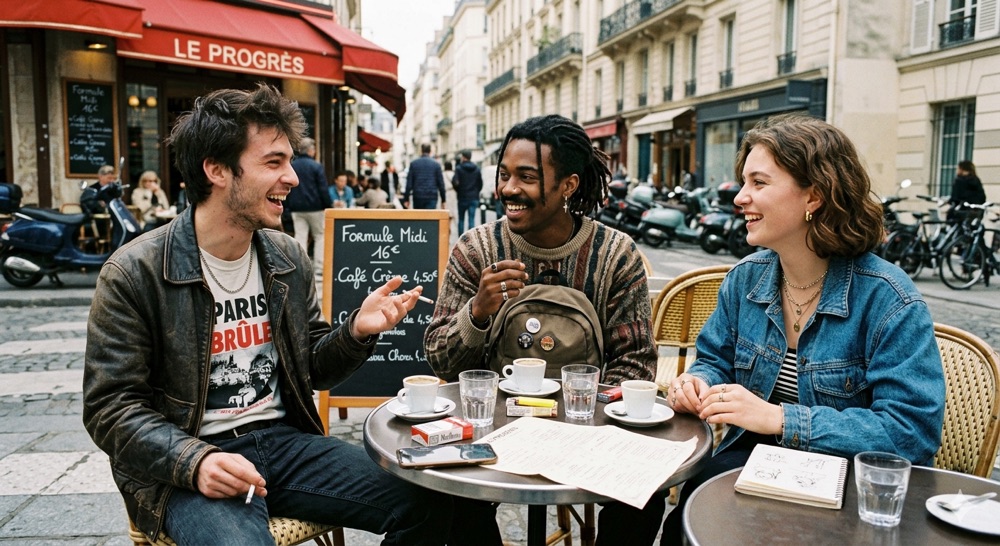
Learn real French argot used in cafés and everyday conversation—words and expressions you will not find in most textbooks.

Go beyond “je t’aime” with romantic French words and sayings, from un baiser to un coup de foudre.
Practice French before and after class with the best apps for iPhone and iPad, including translators, dictionaries, and lessons.
Have you written an article about learning French that we should link to? Email outreach@vidalingua.com



© vidalingua