
Are you looking for the best language schools in Brazil? Then you are in the right place. Brazil has hundreds of schools that teach Portuguese to foreigners, and we have picked the best language schools for learning Portuguese in Rio de Janeiro, São Paulo, Salvador, Florianópolis, Olinda, Maceió and Brasília, cities where the classroom is only half the adventure.
With roughly 260 million speakers, Portuguese is one of the most widely spoken languages in the world and the most spoken language in the Southern Hemisphere. It is an official language in nine countries on four continents, from Angola and Mozambique to Cape Verde and East Timor. Yet the vast majority of its speakers live in Brazil, which has about twenty times the population of Portugal. When the explorer Pedro Álvares Cabral landed on the coast of Bahia in 1500, he could hardly have imagined that Brazil would one day become the largest Portuguese-speaking nation on earth.
Brazilian Portuguese has a flavor all its own. Over five centuries it absorbed words from Tupi and other Indigenous languages, such as abacaxi (pineapple), jacaré (caiman) and capivara (capybara), as well as words brought by enslaved Africans, like cafuné, the tender act of running your fingers through someone's hair. Brazilians pronounce their vowels more openly than speakers in Lisbon, prefer você to tu in much of Brazil, and are famously patient with learners. And then there is saudade, a bittersweet longing for someone or something you love, which has no exact equivalent in English.
The country is just as remarkable. Brazil is the fifth-largest country in the world by area and shares a border with every South American nation except Chile and Ecuador. It holds about 60 percent of the Amazon rainforest and is home to the largest Japanese community outside Japan, centered in São Paulo. From Rio's Carnival, often called the biggest party on the planet, to the colonial streets of Olinda and Salvador, every region offers a different accent, cuisine and rhythm.
Whether you are learning Brazilian Portuguese for work, to pass an exam or to get the most out of a holiday, studying in Brazil lets you practice every day, whether you are ordering a cafezinho, bargaining at a street market or chatting with new friends on the beach. The language schools below are some of the best in Brazil, delivering quality teaching in fantastic settings, and you might make lifelong friends along the way.
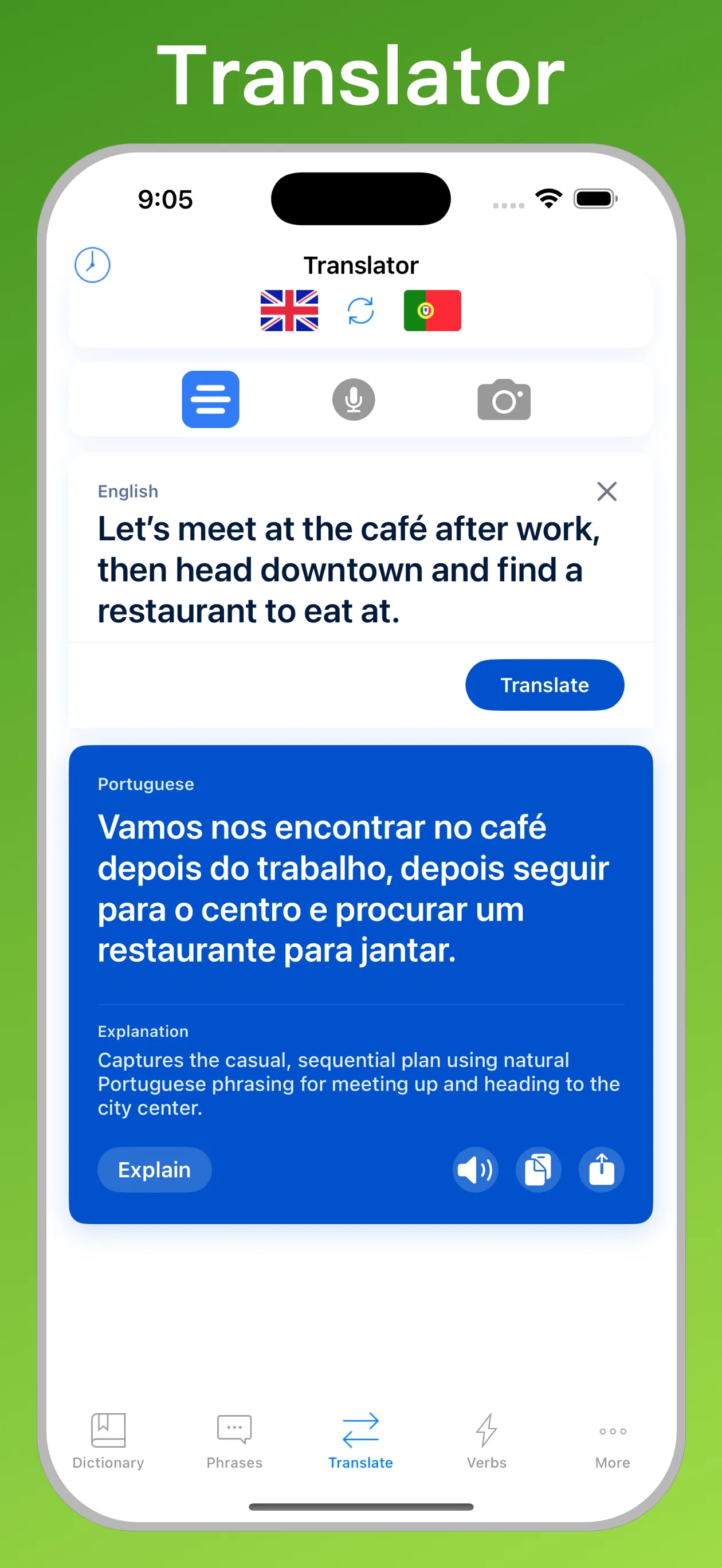
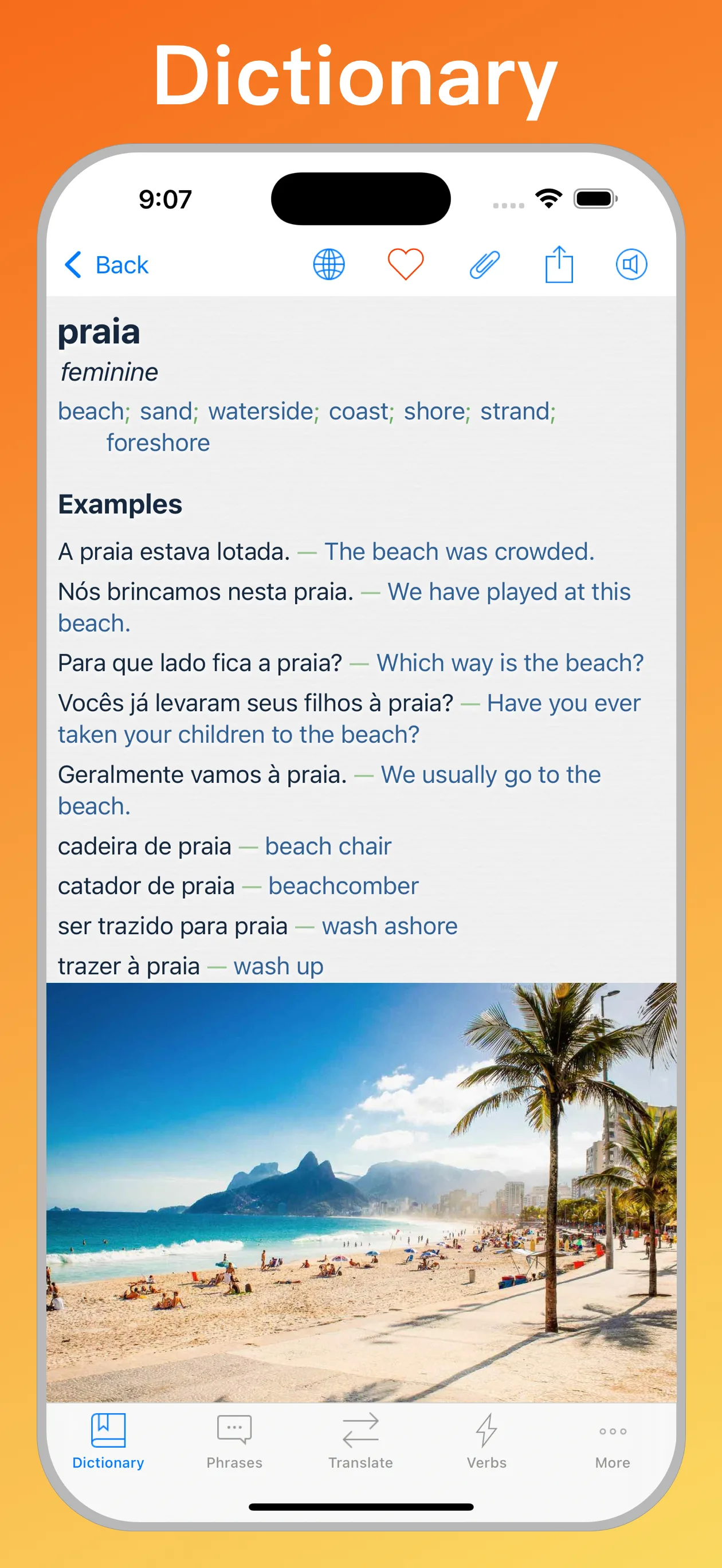
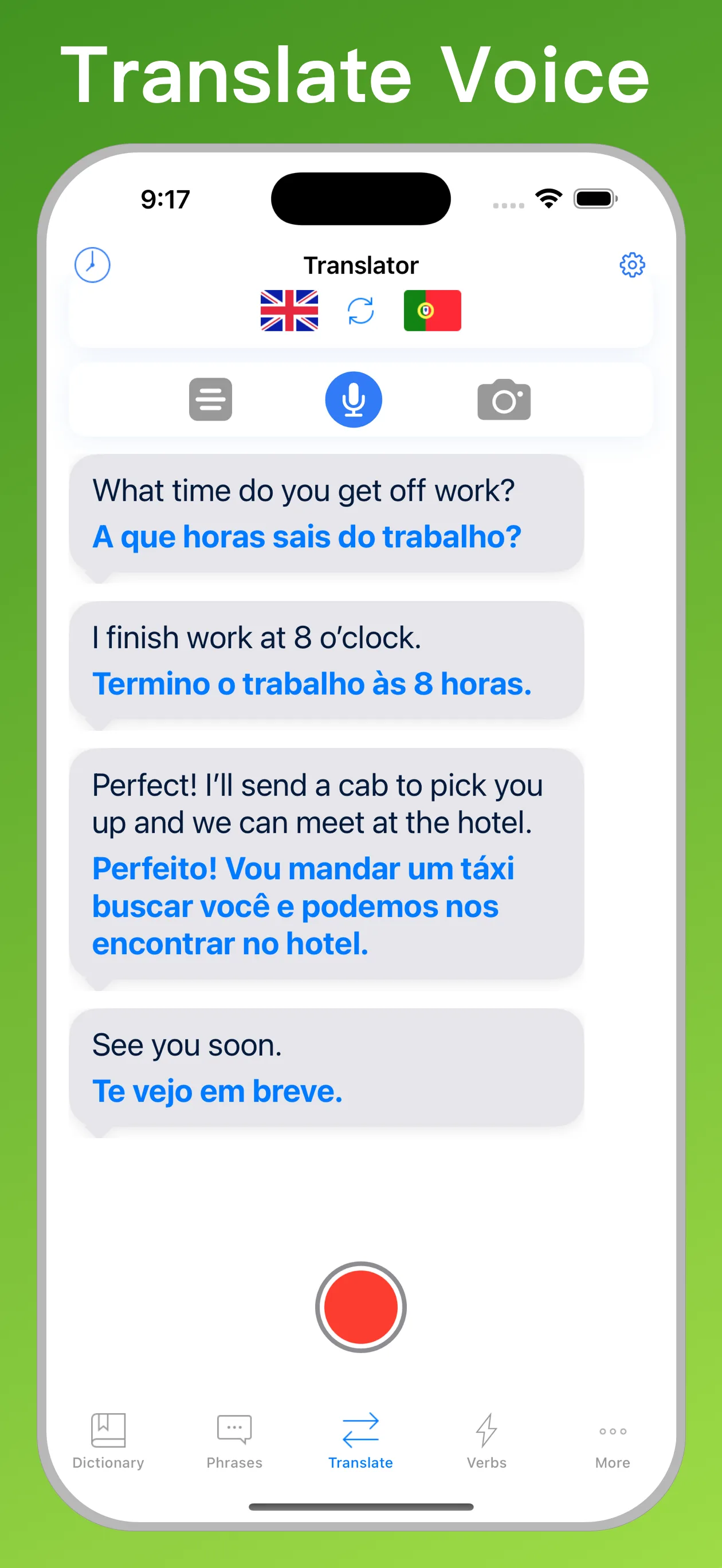
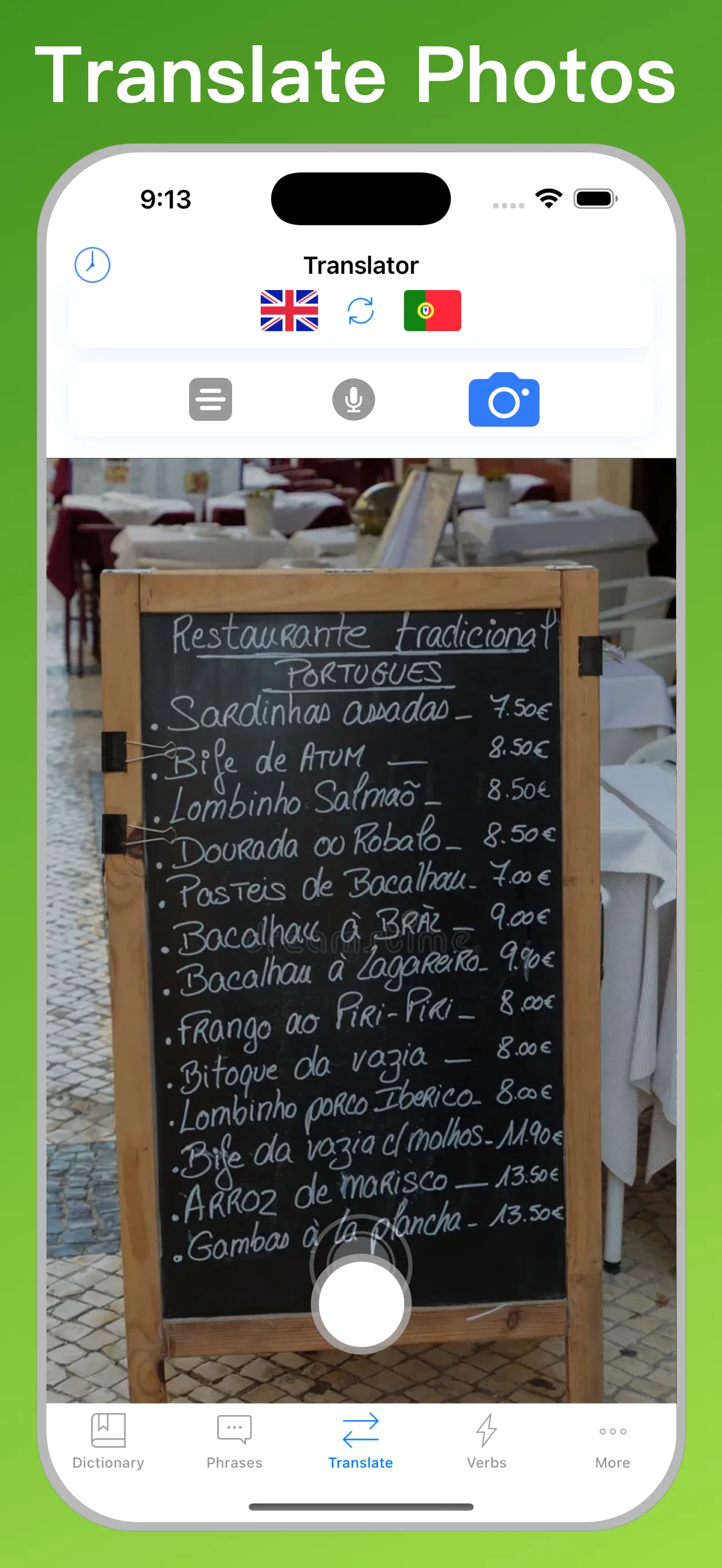
Learning is a lot easier with a great app. Portuguese Translator + by VidaLingua gives you offline lookup, voice and text translation, verbs, a phrasebook, and practice tools so you can check forms used in Brazil and forms used in Portugal as you study. Portuguese Translator + allows you to select the Portuguese dialect, Brazil or Portugal, before requesting a translation and as a default for pronunciation. Download it for free on your iPhone or Android. Give it a try!


Rio & Learn is a Portuguese language school in Rio de Janeiro that provides a fantastic location to learn Portuguese. The school is just a few metres from the beach so you can relax after class and enjoy the sun. Famous beaches like Copacabana and Ipanema are walking distance and Rio's many treasures are easily accessible by bike, bus or metro. You will learn Portuguese while enjoying sunkissed beaches, evocative samba, spectacular views, rich culture, mouth-watering cuisine and vibrant people.
At Rio & Learn, learning Portuguese is innovative and fast. Classes have a maximum of six people so your teacher's attention is truly focused on your learning needs. For students who want to learn faster, Rio & Learn offers one-to-one classes. You’ll assimilate the language as we take you to different places to live real situations. With Rio & Learn’s Funlearning Method, enjoyment is central to the language learning experience. Choose to learn Portuguese while having the experience of your life at Rio & Learn.
Few language schools in Brazil can match Rio & Learn's address on Rua Siqueira Campos in Copacabana, and new students can start any Monday at beginner, intermediate or advanced level. The intensive group course runs 20 hours a week, Monday to Friday from 9am to 1pm, in groups of two to six students with native Brazilian teachers, and class materials are included at no extra cost. Its RioLIVE! activities take students to landmarks, the best viewpoints, beaches and dance spots so they keep speaking Portuguese outside the classroom. For longer stays, the language school offers six-month and one-year packages with the letter of acceptance needed to apply for a VITEM IV student visa. Rio & Learn also runs live online classes and an immersion program in Recife, in northeastern Brazil.
Olinda School offers regular courses in Portuguese Language Instruction for students in both group and private lessons. For the best learning experience, the group courses are limited to a maximum of 6 people per class, and class meets Monday through Friday. Private lessons are available for new or advanced students and professionals who have a specific focus in either verbal or written communication.
The school now operates as Learn Portuguese in Olinda Brazil, and its new group program weaves local culture into every lesson. After class, the town's colorful streets, the rhythm of maracatu and conversations at neighborhood bars become an extended classroom, with your teachers acting as cultural guides. Online lessons are also available, and the language school prepares students for the Celpe-Bras, the official Brazilian proficiency exam required for admission to Brazilian universities and often used for professional or visa purposes. Former students praise teacher Norman Monteiro for creating an immersive environment rooted in Olinda's history and culture.
Olinda is one of the best-preserved colonial towns in Brazil. Founded by the Portuguese in the 1530s, its historic center of pastel houses and baroque churches sits on a green hill above the Atlantic and is a UNESCO World Heritage Site. Recife, the capital of Pernambuco, is just to the south. During Carnival, giant papier-mâché puppets known as bonecos gigantes parade through the steep cobblestone lanes to the sound of frevo. For learners who want to experience the Northeast, Olinda is one of the best places in Brazil to combine language study with culture, and its schools are smaller and calmer than those in Rio or São Paulo.
Studying at ICI means knowing and experiencing a pleasant experience of Brazilian culture, through learning the Portuguese language. From the beginning of the program, you will be in contact with native speakers, walk around the school district, to better understand the area where they normally live and study. The "Language Exchange" is offered to students who wish to practice the conversation with other Brazilians who also wish to practice another language.
ICI is based in the Barra neighborhood of Salvador, the capital of Bahia in northeastern Brazil, and courses start every Monday for all levels. Its programs are built around full immersion, with extra activities such as samba, capoeira and lessons on Carnival culture, as well as surfing, diving, dance classes and volunteer programs. Travelers with only a few days in the city can take a short survival course, and ICI was the first of the language schools in Bahia to offer Portuguese lessons online.
Intermediate and advanced learners often choose ICI's Celpe-Bras preparation course, one of its most popular programs. The school has also designed special programs for American students with FLAS fellowships and for Germans taking Bildungsurlaub educational leave. Combined with the language exchange, these options make ICI one of the most flexible language schools in Brazil, whether you are staying for a week or a full semester.
Idiomas To Go has been teaching Portuguese to foreigners in São Paulo, Brazil's largest city, since 2001 and specializes in courses for adults. The language school has two branches: one in Moema, a leafy, safe neighborhood close to Ibirapuera Park and a short walk from the subway, and another near Avenida Paulista. Like most schools on this list, it uses the communicative approach, levels are based on the Common European Framework from A1 to C2, and teachers use separate programs for speakers of Spanish and other Latin languages and for speakers of English and other languages.
The intensive group course has a maximum of seven students and runs 15 hours a week, Monday to Thursday, for two to four weeks. Students who prefer a tailored schedule can take one-to-one lessons starting at any time of year, form a private VIP group with colleagues or family members, or study online. Like several language schools on this list, it also offers Celpe-Bras exam preparation, in-company classes and programs for expatriate families, including children and teenagers.
What makes Idiomas To Go stand out from other language schools in Brazil is its weekly cultural activities. Students make brigadeiro, the chocolate treat served at nearly every Brazilian birthday party, take a class at the neighborhood farmers' market while tasting pastel and sugarcane juice, and visit museums together. Teachers also share their best ideas for weekends, from the Sunday craft fair in Embu das Artes to the beaches about 80 kilometers away on the São Paulo coast.
Diálogo Brasil is one of the first schools of educational exchange in Brazil. Founded in 1989 in Salvador da Bahia, it is a reference in teaching and training of acculturation Portuguese. That's over 28 years of experience and quality in teaching Portuguese and Brazilian culture. Their mission is to provide the best language and Brazilian culture program with quality services and creating new partnerships that share the philosophy and values of the company, customer satisfaction.
Today Diálogo Brazil is one of the longest-running language schools in Brazil, with more than 30 years of experience teaching foreigners in Salvador. The school occupies a large house in Barra, one of the city's most traditional districts, just a two-minute walk from Porto da Barra, often called the most beautiful beach in the city. Lessons follow a communicative approach with native teachers specialized in Portuguese as a foreign language, and the staff also speaks English, Spanish and German. Courses start every Monday and can last a few weeks or several months. As at other schools in Salvador, students can join volunteering, sports, dance, gastronomy, capoeira and cultural activities outside class. Diálogo won the iStudy Language School Award in 2018, which recognizes the best language schools around the world.
Salvador was Brazil's first capital, from 1549 until 1763, and its historic center, the Pelourinho, is a UNESCO World Heritage Site filled with colorful colonial buildings and ornate churches. It is also the heart of Afro-Brazilian culture. Try acarajé from a baiana vendor dressed in traditional white, watch a capoeira roda, or follow the thundering drums of Olodum through the Pelourinho. For learners who love music and history, Salvador is one of the best cities in Brazil to study, with schools close to both the beach and the historic center.
Fala Aí is a Portuguese language school for foreigners founded by Igor Felizzola, who had taught at another school for two years before opening his own and inviting his best friend Filipe to join him. In more than ten years, it has taught over 5,000 students from more than 50 countries, and it now has schools in Rio de Janeiro, São Paulo and Florianópolis, plus online classes. The São Paulo school sits at Avenida Paulista 509, in the Edifício Patrimônio across from Brigadeiro subway station, in a building whose arcade has cafés and a huge bookstore.
Before you enroll, the team talks with you about your goals, routine and level, then recommends group classes, private lessons, online study or a specific program. Unlike schools that require a month-long commitment, Fala Aí sells group class packages starting at one week, each including a textbook. For longer stays, Fala Aí offers student visa programs of three to twelve months and a two- to four-month Celpe-Bras preparation course. Lessons combine conversation, reading, writing and Brazilian culture, with the focus on using Portuguese confidently in everyday life. That flexibility makes it one of the best language schools in Brazil for students with busy or changing schedules.
Avenida Paulista is the beating heart of São Paulo, home to some of the best museums in the city, including MASP and the Instituto Moreira Salles, and on Sundays it closes to cars and fills with pedestrians, musicians and street vendors. The city was shaped by immigration from Italy, Portugal, Lebanon, Japan and many other countries: nearby Liberdade has Japanese lanterns and a lively weekend street fair, Bixiga is known for its Italian cantinas, and Vila Madalena is famous for the street art of Beco do Batman and its bohemian botecos.
Caminhos Language Centre is one of the largest language schools in Brazil, teaching Portuguese in its own three-story building with 20 classrooms on Rua Farme de Amoedo in Ipanema, four blocks from Ipanema Beach and five minutes from General Osório subway station. More than 25 Brazilian teachers follow the school's own curriculum, with textbooks written by the teaching team and a communicative approach that gets students speaking from day one. Group classes run year-round across 12 levels, and Caminhos is accredited by international associations such as IALC, which represents independent language schools worldwide, and is approved for German Bildungsurlaub educational leave.
The intensive group course meets Monday to Friday from 9am to 1pm for 20 hours a week, from beginner to advanced. Speakers of Spanish or Italian can join a special course for Latin-language speakers, something only a handful of schools in Brazil offer, and others can add private lessons, afternoon conversation classes, Celpe-Bras preparation or Rio Immersion lessons held outdoors around the city. The language school also offers online courses, support for six-month and one-year student visas, and help with homestays, apartments and airport pick-up.
After class, students can join free activities such as beach volleyball, samba and capoeira, and since 2009 the school's social project, Mais Caminhos, has supported underprivileged children in Rio with the help of international volunteers. Ipanema itself is a lesson in Brazilian culture: the bossa nova classic Garota de Ipanema was inspired by a girl walking to the beach here, and at sunset locals gather on the rocks of Arpoador, one of the best sunset spots in Brazil, to applaud the sun as it sinks into the Atlantic.
SUN7 School is a small local school specialized in the teaching of Portuguese as a second language. The school was created in 2008 by teachers who had experience in teaching Portuguese in other language schools in Florianópolis. The opportunity to open their own school provided these teachers with the freedom to research the most up-to-date theories and methods to develop their own approach to teaching Portuguese.
What sets SUN7 apart from larger language schools is the support it gives students beyond the classroom. The team helps you settle into Florianópolis, from finding accommodation to discovering local activities and places to enjoy, and teachers give each student personalized attention. Like the other small schools on this list, SUN7 values close relationships and aims to create a welcoming environment where everyone feels comfortable and encouraged to learn.
Florianópolis, often called Floripa, is the capital of Santa Catarina in southern Brazil and lies mostly on an island in the Atlantic. It is famous for its quality of life and its dozens of beaches, from the calm bays of the north to the surf breaks of the east coast. Spend a weekend hiking to hidden beaches, sandboarding on the dunes of Joaquina or watching surfers at Praia Mole, and you will quickly pick up the vocabulary of everyday life. It is one of the best cities in Brazil for combining language study with life outdoors.
Learn Portuguese with Celisa Canto is a small, teacher-led language school in Lagoa da Conceição, on the island of Florianópolis. Celisa Canto has taught Portuguese to people from around the world for more than 40 years, and her one-to-one and small-group courses are built around each student's needs, strengths and weaknesses, with a practical, direct approach in which grammar, reading and writing follow naturally from conversation. Former students describe well-structured, individually tailored lessons with plenty of homework, and praise her knowledge of the history and etymology of languages, which helps learners see how Portuguese connects to the languages they already speak.
Her most distinctive offering is Live & Learn, an immersion program of two weeks to three months in which you live in Celisa's home and take part in her daily routine and social life, from preparing breakfast together to saying boa noite at the end of the day. Celisa also prepares students for the Celpe-Bras exam with mock tests, and since she was teaching online long before Skype existed, you can easily continue your lessons by video call after you return home. Few schools in Brazil offer this level of one-to-one immersion.
Floripa's Azorean heritage is part of the experience. Settlers from the Azores arrived on the island in the 18th century, and their legacy lives on in the colorful fishing villages of Santo Antônio de Lisboa and Ribeirão da Ilha, where restaurants serve some of the best fresh oysters in Brazil, farmed in the surrounding bays.
Vila Brasil is a Portuguese language school for foreigners in Brasília that specializes in personalized courses for diplomats, expatriates and professionals. Native teachers give in-person classes in Brasília as well as online lessons, and each course is tailored to the student's routine and goals, with Brazilian culture and communication integrated from the start. Unlike most language schools on this list, it also teaches English, Spanish and French.
Its Linguistic and Cultural Immersion program combines intensive Portuguese classes with living with a local host family in Brasília, plus cultural activities and excursions. The standard program lasts four weeks and can be customized. Like Caminhos, Vila Brasil is one of several schools in Brazil with a social mission: its program Portuguese as a Welcoming Language, has volunteer teachers giving free Portuguese lessons to immigrants and refugees, using materials the school's teachers designed for smartphones and WhatsApp.
Brasília itself is unlike any other city in Brazil. Built from scratch in the late 1950s and inaugurated as the capital in 1960, it was designed by urban planner Lúcio Costa and architect Oscar Niemeyer, and its modernist center is a UNESCO World Heritage Site. With more than 100 embassies in the city, it is also one of the best places in Brazil to study if you work in diplomacy or international relations.
The Language Club is a language school that has been teaching Portuguese as a foreign language at all levels since 1993. In addition to its quality, the school also stands out for its privileged location in Florianópolis, south of Brazil. The Language Club building has currently 9 classrooms on 2 floors, including 4 rooms with interactive whiteboards. All classrooms are equipped with air conditioning and sound systems. There is also a library available for the students. The school is a wi-fi zone, allowing students to use their own notebooks and smart technology. In addition, there are restroom facilities, a coffee lounge and a beautiful garden.
Of the language schools in Florianópolis on this list, The Language Club has the longest track record. It is located on Avenida Afonso Delambert Neto in Lagoa da Conceição, the lively lagoon district at the center of the island. Its communicative, humanistic approach builds lessons around real-life situations and includes aspects of Brazilian culture in the syllabus. The General Portuguese course runs 10 hours a week in four classes of two and a half hours, Monday to Thursday, which leaves long weekends free for exploring some of the best beaches in Brazil, and includes coffee breaks where you can taste typical Brazilian snacks and chat with teachers and classmates. One-to-one lessons can be added or taken on their own, from 1.5 to 6 hours a day.
For longer stays of 12 to 24 weeks, the school provides the documentation needed to apply for a student visa for Brazil, which requires at least 15 hours of study per week. It also designs immersion programs for government officials and business professionals, which can include company visits and meetings with professionals in the student's field. In the cooler months, look out for the tainha (mullet) fishing season, and ask your teachers about the island's own manezinho accent.
Go Brazil was originally a colonial style house with a big wild garden. After reconstruction the area has been increased with a guest house which offers 6 cosy private apartments. Each apartment has Wi-Fi access. Portuguese Classes are held in a common room which is also used for other common activities. Another common place is a veranda with ocean view where students can get together, relax in the nets or in the open sun. There´s a little kitchen with some facilities for cooking.
Go Brazil is located in Garça Torta, a beach village about 20 minutes from Maceió, the capital of Alagoas in northeastern Brazil. It describes itself as neither a school, a hostel nor an NGO, yet it combines all three: students live as guests in a typical Brazilian beach house, take conversation-focused Portuguese classes with native teachers, and meet people from around the world. Former students praise the host, Malú, for making them feel part of the family.
What makes Go Brazil unique is its volunteering program. Students can combine Portuguese lessons with projects in rural development, environmental and marine conservation, animal welfare and childcare, as well as therapy programs that use capoeira or horses to help people with disabilities. It is one of the best choices in Brazil if you want to improve your Portuguese while making a social impact, and a refreshing alternative to traditional language schools.
With so many language schools in Brazil, choosing the best one comes down to your goals, budget and travel plans. Start with location, since schools in different regions offer very different experiences. Schools in Rio de Janeiro and Florianópolis put you close to the beach, schools in São Paulo suit business learners, and schools in Salvador, Olinda and Maceió immerse you in the culture of northeastern Brazil. Schools in Brasília cater to diplomats and other professionals.
Next, compare class formats. Most language schools in Brazil offer intensive group courses of 10 to 20 hours a week, plus private lessons, which are the best option for faster progress. Small groups give you more time to speak, so compare the maximum class size at each of the schools you are considering before you book. If you plan to stay longer than a few months, look for language schools that provide the letter of acceptance you need for a student visa, and ask whether they prepare students for the Celpe-Bras exam.
Finally, think about life outside the classroom. The best language schools in Brazil organize cultural activities, help you find a homestay or apartment, and connect you with Brazilians who want to practice English. The best schools also assess your level on the first day and track your progress. Read recent student reviews, ask schools about start dates and prices, and book a trial lesson if one is available. A great language school will make you feel at home in Brazil from your very first day.
The best language schools in Brazil depend on where you want to live and how you like to learn. Rio & Learn and Caminhos Language Centre are popular choices in Rio de Janeiro, Idiomas To Go and Fala Aí serve students in São Paulo, Diálogo Brazil and ICI are long-established schools in Salvador, and Sun7, The Language Club and Celisa Canto offer smaller classes in Florianópolis, in the south of Brazil. All of these schools employ experienced native Brazilian teachers.
Prices vary by city, course length and intensity. Group courses at language schools in Brazil usually cost less per hour than private lessons, and many schools offer discounts for longer stays, so the best value usually comes with longer bookings. Contact the language schools directly for current prices, since most update their fees every year.
Yes. Several language schools on this list, including Rio & Learn, Caminhos Language Centre, Fala Aí and The Language Club, provide the documentation needed to apply for a student visa for Brazil. Brazilian rules require at least 15 hours of study per week for the visa, so check that your language course meets that minimum.
Rio de Janeiro is the most popular choice, with beaches, music and the widest selection of language schools. São Paulo is best for business and city life, Salvador and Olinda for Afro-Brazilian and northeastern culture, Florianópolis for a relaxed island lifestyle, and Brasília for diplomats. Any of these cities in Brazil will give you plenty of chances to practice.
Most schools in Brazil start new groups every Monday, so you can usually begin within a week or two of booking. During Carnival and the summer high season from December to February, popular schools in Rio, Salvador and Florianópolis fill up quickly, so book a few weeks ahead.
No. All the schools on this list teach beginners, and most language schools in Brazil place you in a group that matches your level after a short placement test. Speakers of Spanish or Italian often progress fastest, and some schools, such as Idiomas To Go and Caminhos, offer special programs for them.
Yes. Many schools on this list, including Rio & Learn, Caminhos, Fala Aí, Celisa Canto, Olinda Language School and Vila Brasil, offer live online lessons, so you can start before you travel to Brazil and continue after you return home.
If we missed one of the best language schools in Brazil, even if it's your own, don't hestiate to contact us at outreach@vidalingua.com.
Looking for the best app with interactive exercises to practice speaking and comprehension? Download Learn Portuguese + for free on your iPhone or iPad.
Viagens felizes!
If you found this article useful, share it with friends using the buttons below.
Happy learning!

Marc Bolh
Founder, Vidalingua

Heading to Brazil or Portugal? Learn the key differences in pronunciation, vocabulary, grammar and spelling between the two main varieties of the Portuguese language.
Prefer private lessons from home to classes at language schools in Brazil? Browse online tutors who specialize in Brazilian Portuguese conversation, exams, and travel prep.

Dreaming of the Cidade Maravilhosa? Compare language schools in Rio de Janeiro, Brazil's most famous city, for Portuguese courses close to the beach, culture, and nightlife.


© vidalingua