
Are you planning a trip to Rio, a course in Brazil, or a career that spans the Lusophone world? Then you have probably wondered how speech in Brazil compares with speech across the Atlantic. Songs, films, and conversations sound different from city to city. The good news is that speakers understand each other remarkably well once you know where the varieties diverge.
Portuguese is a global language with deep roots on both sides of the ocean. Everyday talk in Brazil carries its own rhythm, vocabulary, and grammar habits. In Lisbon and Porto, the same shared foundation takes a different shape in sound and formality. Understanding Brazilian Portuguese versus European Portuguese helps you choose teachers, apps, and media that match your goals—and saves you from awkward surprises in cafés, classrooms, and meetings.
Portuguese did not freeze in the sixteenth century. Ships, courts, radio, television, and migration pulled the language in more than one direction. Today you hear Brazilian Portuguese in football stadiums and streaming hits, while European Portuguese anchors newsrooms, universities, and heritage tourism in Portugal. Both belong to one language family tree; both reward careful listening. Portuguese connects continents. Learners who respect Brazilian habits beside European habits travel farther in study and media.
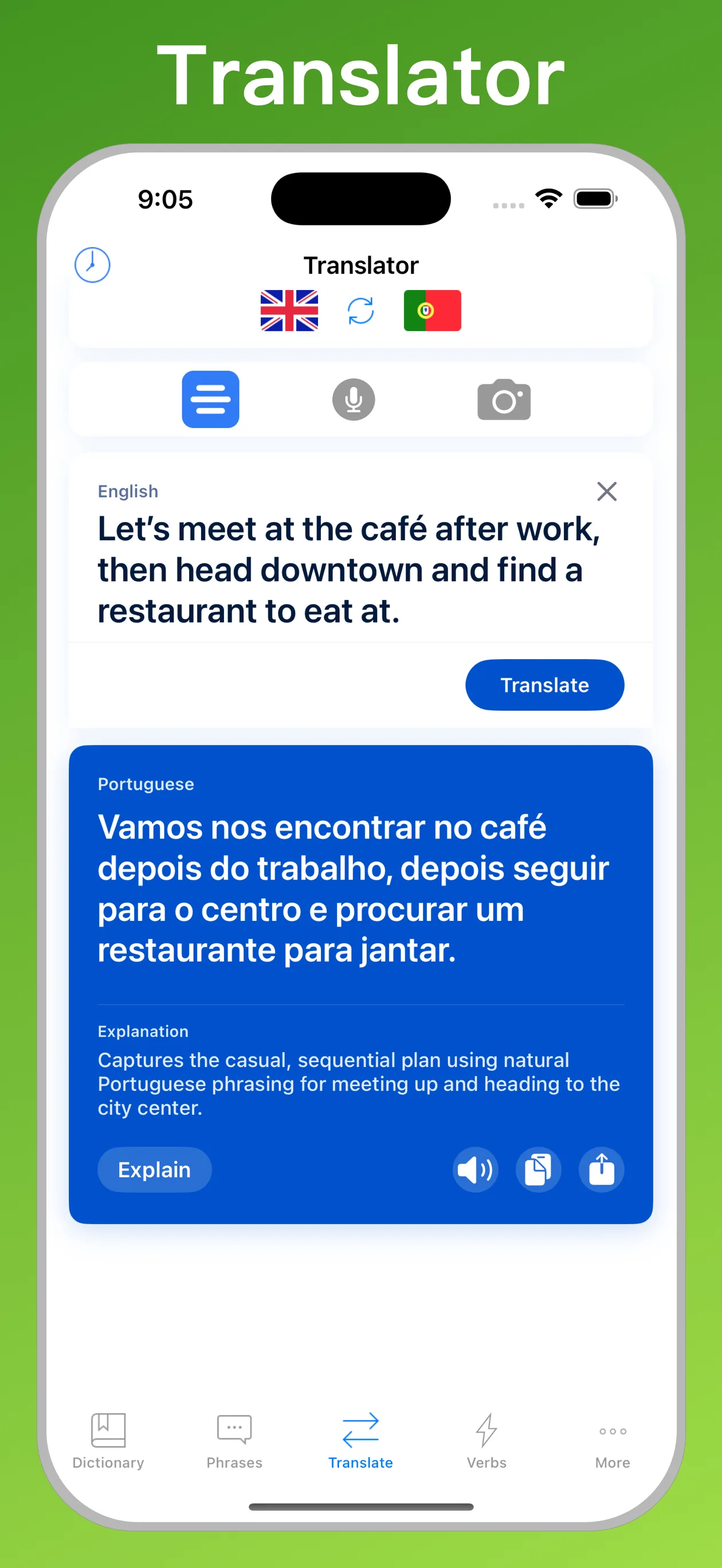
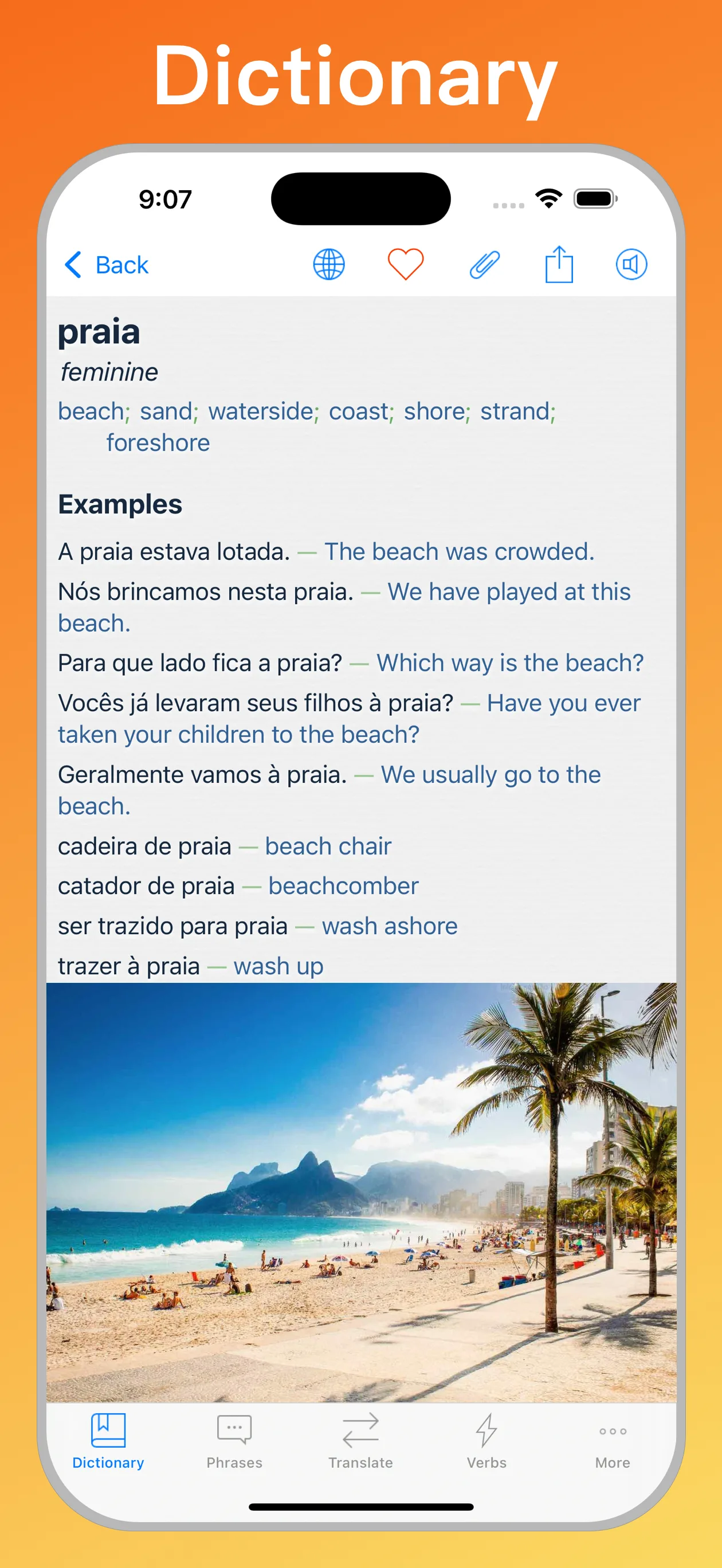
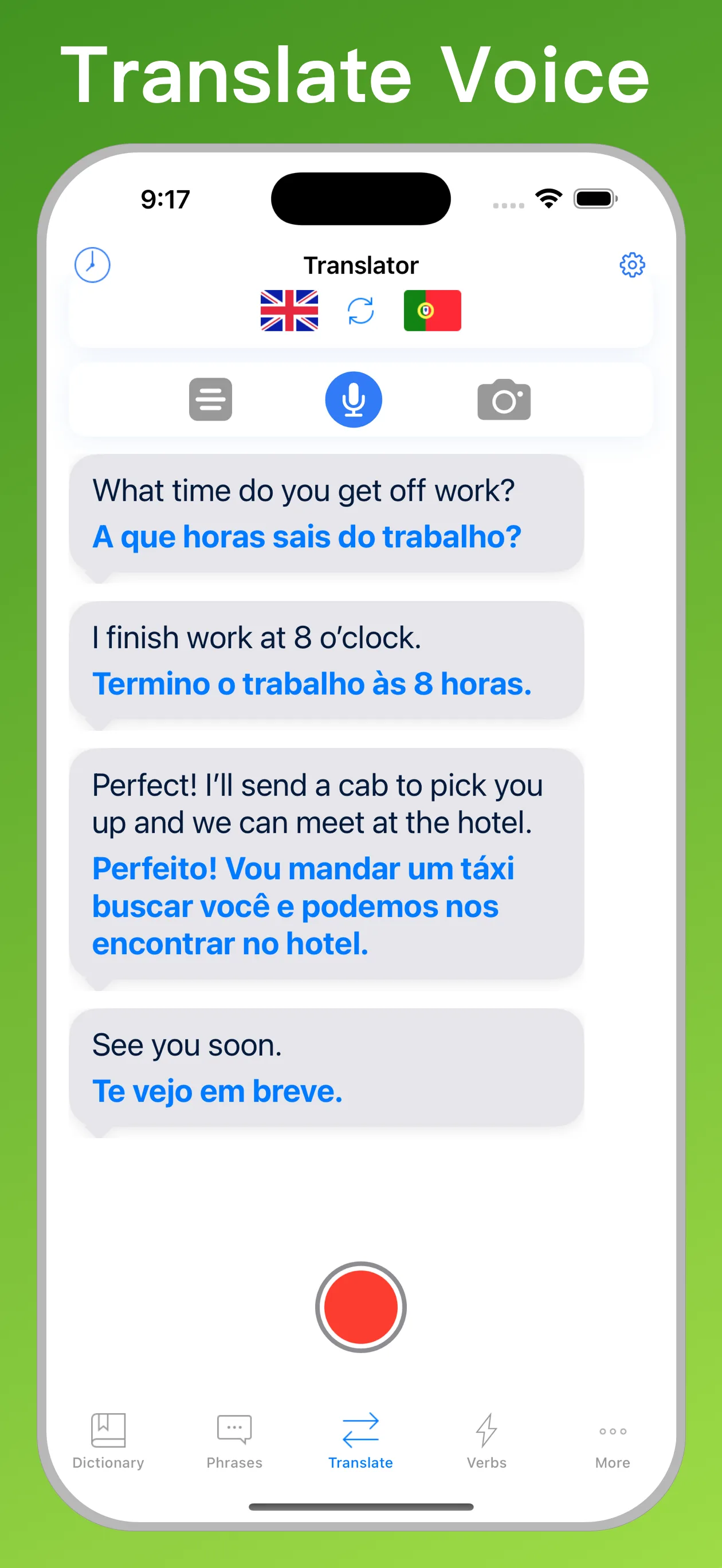
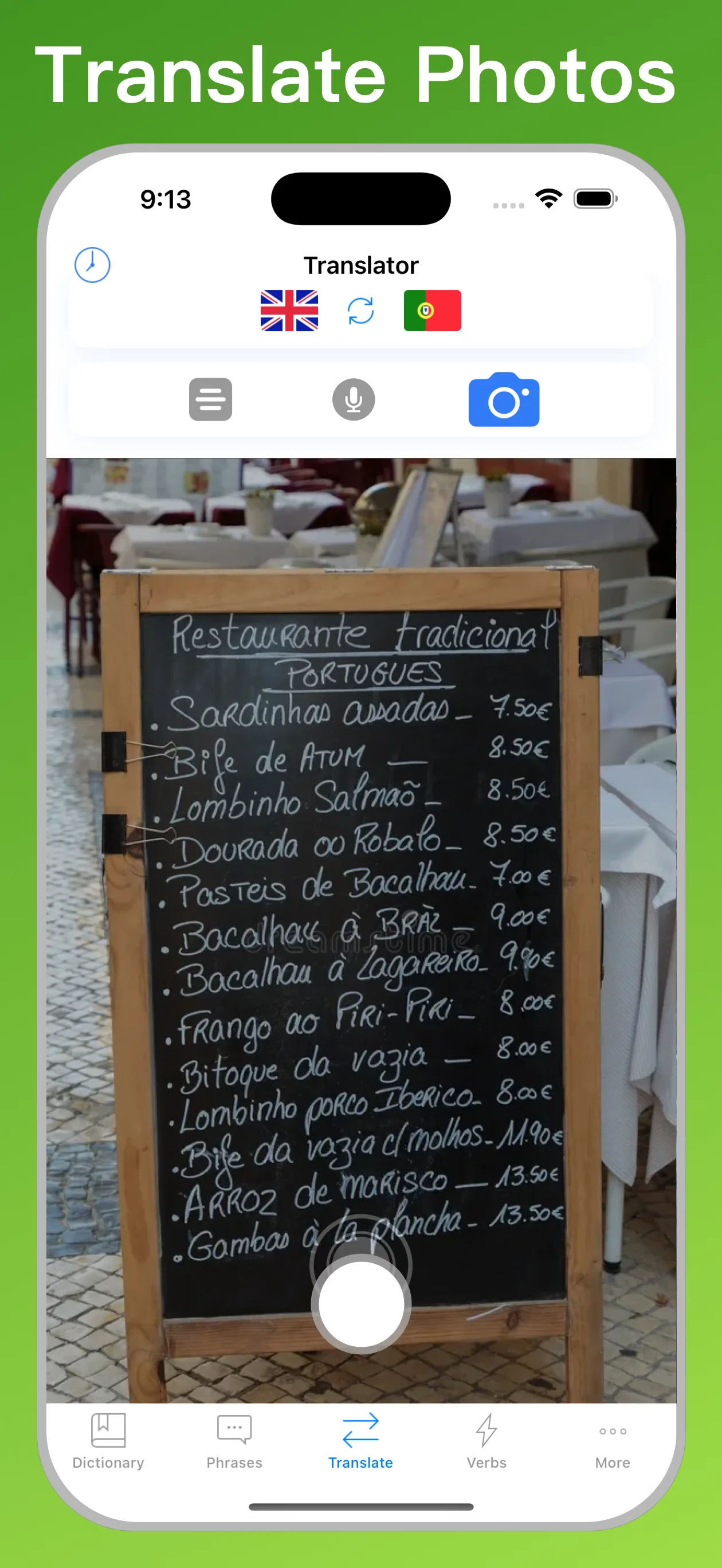
Learning is a lot easier with a great app. Portuguese Translator + by VidaLingua gives you offline lookup, voice and text translation, verbs, a phrasebook, and practice tools so you can check forms used in Brazil and forms used in Portugal as you study. Portuguese Translator + allows you to select the Portuguese dialect, Brazil or Portugal, before requesting a translation and as a default for pronunciation. Download it for free on your iPhone or Android. Give it a try!


The first difference most learners notice is sound. Brazilian Portuguese often feels more open and syllable-timed, with clear vowels that help beginners catch words in songs and soap operas. European Portuguese reduces many unstressed vowels, so phrases can sound compressed to ears trained only on media from Brazil. Final syllables may nearly disappear in fast speech in Portugal, while speakers in São Paulo or Salvador tend to keep more of the word audible.
In the example below, the English phrase is translated into Portuguese as it would be written and pronounced in Portugal and Brazil.
I’m going to have a juice and catch the train.
Vou tomar um sumo e apanhar o comboio. (Portugal)
Vou tomar um suco e pegar o trem. (Brazilian)
Take the letter s at the end of syllables. In much of Brazil it often sounds like a soft s, whereas in Portugal—and in parts of Rio—it can sound like sh. The letter r also splits the map: speech in Brazil may use a guttural or English-like h sound depending on region, while European Portuguese has patterns that change by city. Neither system is “more correct”—they are regional habits of Portuguese that developed over centuries of contact, migration, and media.
Intonation matters too. Talk from Brazil frequently rises and falls in a melodic way associated with spoken warmth on television. Speech from Portugal can sound flatter or more clipped to outsiders, especially in Lisbon and in Porto. If you train your ear with podcasts from Brazil and then land in Portugal, give yourself a week of café listening before you judge your comprehension. The reverse is equally true for learners who start with materials from Portugal and later binge series filmed in Rio.
Most Portuguese is shared, but everyday nouns often split by Atlantic shore. The table below lists common English meanings with the forms you are most likely to hear in Brazil and in Portugal—useful before you order breakfast, board a bus, or open a file on someone else’s laptop.
| English | Brazil | Portugal |
|---|---|---|
| train | trem | comboio |
| bus | ônibus | autocarro |
| bus stop | ponto de ônibus | paragem |
| subway / metro | metrô | metro |
| mobile phone | celular | telemóvel |
| breakfast | café da manhã | pequeno-almoço |
| juice | suco | sumo |
| ice cream | sorvete | gelado |
| short coffee | cafezinho | bica |
| draft beer | chope | fino / imperial |
| pineapple | abacaxi | ananás |
| bathroom | banheiro | casa de banho |
| refrigerator | geladeira | frigorífico |
| brown sugar | açúcar mascavo | açúcar amarelo |
| suit (clothing) | terno | fato |
| sneakers | tênis | sapatilhas |
| screen | tela | ecrã |
| computer mouse | mouse | rato |
| file (computer) | arquivo | ficheiro |
| password | senha | palavra-passe |
| remote control | controle remoto | comando |
| truck | caminhão | camião |
| sports team | time | equipa |
| goalkeeper | goleiro | guarda-redes |
| queue (informal) | fila | bicha |
Food and slang widen the gap further: Brazilian cooks borrowed indigenous, African, and immigrant labels, while kitchens in Portugal kept many Iberian market words. Informal talk from Brazil spreads through funk and social media; informal talk from Portugal stays closer to local youth scenes. Pick a target city—Rio, São Paulo, Lisbon, or Porto—and collect phrases from that city’s media.
Grammar differences between Brazilian Portuguese and European Portuguese are fewer than pronunciation differences, but they affect how polite or intimate you sound. In Portugal, tu remains common with friends, family, and peers, while você can feel cooler or more distant depending on region and age. Across most of Brazil, você dominates informal address, and tu appears mainly in the South, in Northeast pockets, and in online styles that borrow habits from Portugal.
Verb endings follow those choices. European Portuguese keeps richer agreement with tu forms in everyday talk. Brazilian Portuguese often pairs você with third-person verb forms, which simplifies conjugation for beginners yet surprises learners who studied textbooks from Portugal. Progressive constructions also differ: speakers in Brazil favor estar + gerund (estou falando), while speakers in Portugal often prefer estar a + infinitive (estou a falar). Both are standard Portuguese; mixing them marks your training path.
Clitic pronoun placement is another classic contrast. Writers in Portugal allow and prefer enclisis in many affirmative statements (diga-me), while writers in Brazil push clitics earlier (me diga) in spoken and informal written styles. Formal writing in Brazil still shows patterns influenced by Portugal, especially in legal and academic prose. If you read novels from Portugal and chats from São Paulo side by side, you will see the continuum of Portuguese grammar rather than a hard wall.
Written Portuguese looks closer across varieties than spoken Portuguese sounds. The Orthographic Agreement aimed to reduce spelling gaps among Brazil, Portugal, and other Lusophone countries. Many silent consonants shifted, accent marks were adjusted, and publishers updated house styles. Still, you will meet older books, street signs, and websites that predate the reform, especially where publishers in Portugal moved more slowly than publishers in Brazil.
Publishing in Brazil produces a huge volume of blogs, news, and subtitles, so learners often absorb spelling norms from Brazil without noticing. Newspapers and literature from Portugal remain essential if your career or studies point to Portugal, Luanda, Maputo, or institutions that prefer European norms. Either way, a modern dictionary that labels Brazilian and European senses keeps you honest when a word has two accepted spellings or meanings.

Politeness scripts differ. In shops and offices in Portugal, greetings may feel more reserved at first contact, with titles and surnames lasting longer. Brazilian workplaces can move faster to first names and warm small talk, though industries and cities vary widely. Neither approach is rude; each reflects local expectations of social distance inside Portuguese-speaking life.
Email formulas illustrate the gap. A message written in European Portuguese may open with structures that sound stiff to readers in Brazil, while a cheerful sign-off from Brazil can seem casual in boardrooms in Portugal. When you write across varieties, prefer clear standard Portuguese, avoid heavy slang, and mirror the formality of the person who wrote first. That habit works whether your counterpart grew up in Brazil or spent childhood in Portugal.
Customer service scripts follow the same logic. Phone trees, chatbots, and bank letters from Portugal often keep a cooler lexical set than marketing copy from Brazil. Train with authentic samples from the sector you need—tourism, healthcare, or engineering—so your Portuguese matches professional expectations rather than only classroom dialogues.
Some words are shared traps. Rapariga is relatively neutral for “girl” in Portugal but can sound offensive in Brazilian Portuguese. Propina means tuition fees in Portugal and a bribe in Brazil. Puto can be a child in European usage and a harsh insult in slang from Brazil. Travelers who memorize a bilingual list of these mismatches save themselves embarrassment faster than any grammar drill.
Public transport, pharmacies, and restaurants reward local listening. If you learned Brazilian Portuguese for a Carnival trip and later visit Portugal, ask locals to slow down rather than switching to English immediately—most appreciate the effort. Guides to Brazilian Portuguese on Wikipedia outline history and phonology if you want a deeper academic map after your first week abroad.
Airport signage and hotel forms are forgiving, yet humor is not. Jokes that land in comedy specials from Brazil may puzzle an audience in Portugal, and dry Portuguese wit can sound cold to visitors from Rio. Laugh with people, not at varieties; curiosity keeps Portuguese conversations open.
Choose based on where you will live, work, or consume culture. If your job, partner, or favorite music scene is tied to Brazil, start with Brazilian Portuguese and accept that Portugal will require an accent adjustment later. If you study near the Atlantic edge of Europe, apply for EU mobility, or follow institutions based in Portugal, begin with European Portuguese and add media from Brazil for listening range. Mutual intelligibility is high for educated speech; the bigger risk is training only on one accent and panicking when reality speeds up.
Teachers should declare their variety on day one. Apps and dictionaries should label Brazilian versus European examples. Streaming helps: watch a novela from Brazil with subtitles written for readers in Portugal, or the reverse, and note every mismatch you catch. Over time you build a flexible ear inside one language—an advantage unique to serious Portuguese study.
Comparative sketches of European Portuguese on Wikipedia’s European Portuguese page pair well with classroom practice when you need terminology for exams.

Exam boards and university admissions sometimes state a preferred variety explicitly. Read those rules before you invest months in the wrong listening pack. If the rubric is silent, ask a coordinator whether answers in Brazilian Portuguese are accepted beside answers in European Portuguese, and keep sample essays in both styles for emergency rewriting.
Brazilian Portuguese rides global waves of music, football, and streaming series that introduce the language to millions who may never visit Brazil. European Portuguese anchors literature, diplomacy, and heritage tourism centered on Portugal, while also connecting to African and Asian Lusophone communities through historical ties. The Community of Portuguese Language Countries highlights how one language supports many identities; explore that network at the CPLP if your interests go beyond simple Brazil-versus-Portugal debates.
Language institutes and cultural centers promote courses, exams, and exchanges that often favor European norms from Portugal. Cultural centers and consulates from Brazil play a parallel role for learners of Brazilian Portuguese abroad. Pick the institution that matches the certificate or visa you actually need.
Shadow short clips daily: one clip in Brazilian Portuguese and one clip in European Portuguese keeps your ear flexible. Keep a two-column notebook for vocabulary pairs you meet in films. When you conjugate, practice both você and tu paradigms so travel does not freeze you. Read news from Brazil and from Portugal on the same topic in one sitting; the shared Portuguese core becomes obvious, and the local flavor stands out.
Speak early, even imperfectly. Native listeners from Brazil and from Portugal correct different things first—pronunciation in one place, pronouns in another. Welcome both kinds of feedback. If you only ever receive corrections from Brazil, schedule a conversation exchange with someone raised on European Portuguese before a long trip, and vice versa. That small insurance policy turns variety differences into curiosity instead of fear. Organizations such as the Instituto Camões support Portuguese teaching worldwide and are useful when you need certified pathways tied to Portugal.
Finally, remember that Portuguese is larger than any single accent. Cape Verdean, Angolan, Mozambican, and other voices belong in the family too. Brazilian Portuguese versus European Portuguese is the comparison beginners ask first, yet the map keeps expanding as you travel and read.
Keep a simple weekly plan: three days of Brazilian Portuguese audio, two days of European Portuguese audio, and one day comparing the same news story in both varieties. That rhythm builds flexible Portuguese without freezing your accent goals, whether you land next in Brazil or in Portugal. A short stay in Portugal after months of Brazilian Portuguese—or European Portuguese practice before you fly—turns theory into street-ready listening.
Before the quick answers below, a neutral historical overview helps frame the debate—see Britannica’s Portuguese language entry for how varieties developed across the Atlantic.
Yes for most everyday topics. Speakers from Brazil and speakers from Portugal usually understand each other, especially in careful speech. Fast informal talk, slang, and strong regional accents can slow comprehension, so learners should train their ears on both Brazilian Portuguese and European Portuguese media.
Many beginners find Brazilian Portuguese pronunciation clearer at first because vowels are more open. European Portuguese can feel denser due to vowel reduction. Difficulty still depends on your teachers, materials, and motivation more than on any absolute ranking of Portuguese varieties.
Generally yes. Residents of Portugal hear Brazilian Portuguese constantly through music, television, and tourism. You may be asked to repeat a slangy phrase, and you should learn local transport and café vocabulary, but your foundation from Brazil transfers well.
If Brazil is your main destination, prioritize Brazilian Portuguese for listening and speaking. A light familiarity with European Portuguese still helps with literature, older spellings, and future travel to Portugal, yet it should not replace input from Brazil when your goals stay there.
Less than before the Orthographic Agreement, but some preferences remain. Modern Portuguese texts from Brazil and from Portugal are largely aligned, while older books and local brands may keep legacy forms. Use an updated dictionary when you write formally in either variety.
Whether you fall in love with Brazilian Portuguese first or train your ear on European Portuguese in Portugal, curiosity beats perfection. Listen widely, label your notes, and treat every mismatch as a clue rather than a mistake. The Portuguese-speaking world rewards learners who can code-switch with respect. Visit Portugal when you can, return to Portugal later, and keep forms from Brazil and forms from Portugal in active rotation.
Looking for interactive exercises to practice speaking and comprehension? Download Learn Portuguese + for free on your iPhone or iPad.
Trips through Portugal, then Brazil, then Portugal again sharpen listening. Boa viagem!
If you enjoyed this article, please share it with a friend using the buttons below.
Happy learning!

Marc Bolh
Founder, Vidalingua

Planning immersion in Rio, São Paulo, or beyond? Compare top language schools for Brazilian Portuguese courses, culture, and flexible schedules.

Prefer private lessons from home? Browse online tutors who specialize in Brazilian Portuguese conversation, exams, and travel prep.
Heading to Portugal? Find language schools in Lisbon for European Portuguese immersion, city living, and courses that match your level.



© vidalingua